






















In stock

In stock
Couldn't load pickup availability
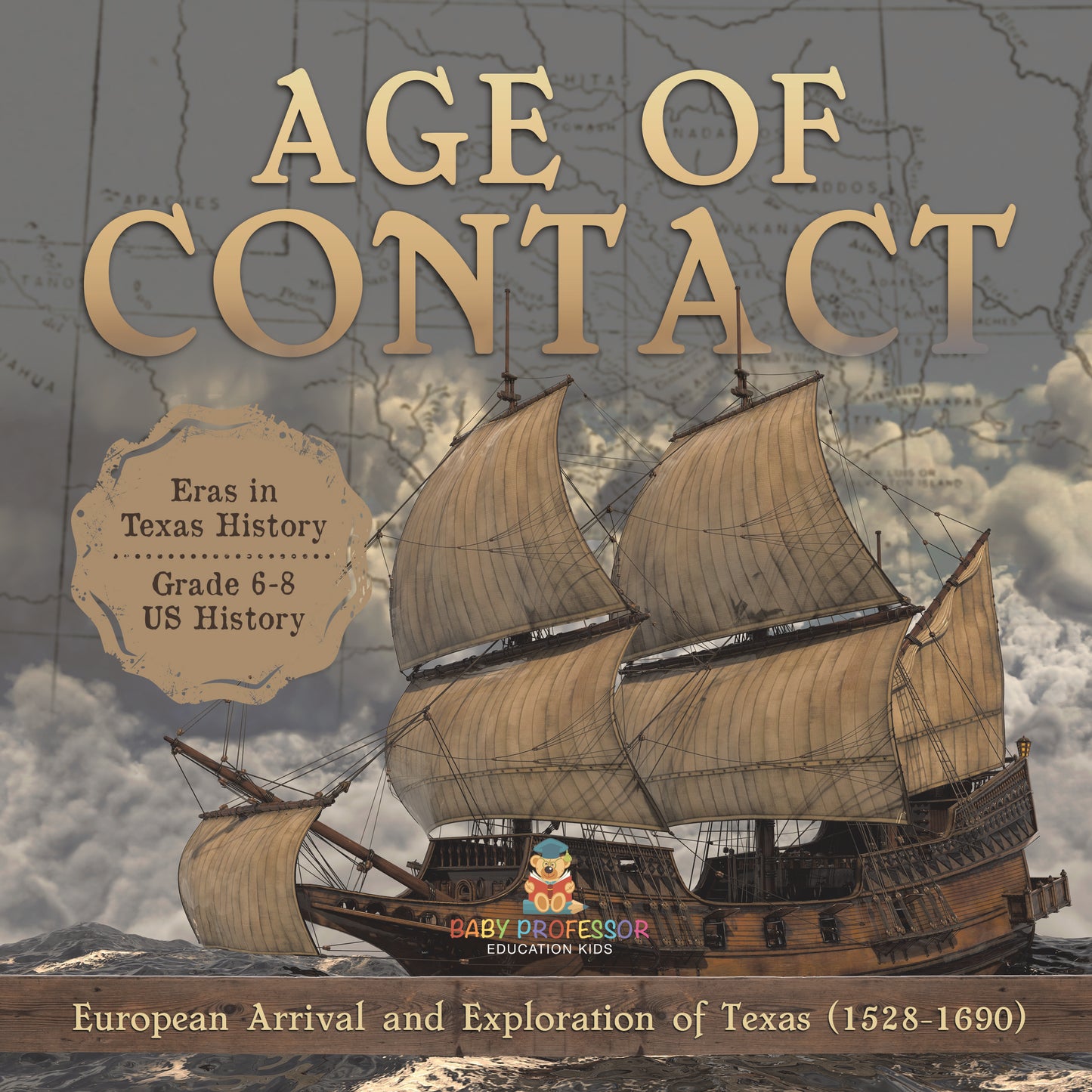


In Age of Contact (1528-1690), students in grades 6-8 will explore the dramatic period when European explorers, primarily from Spain and later France, arrived in Texas. This book provides a comprehensive look at the key events, motivations, and consequences of early European exploration and its impact on the indigenous peoples of Texas.
Spanish explorers searched for wealth during this period and hoped to discover large native empires like the Aztecs and Incas. Despite their failure to find gold or silver, the arrival of Europeans brought lasting changes. European diseases, such as smallpox, devastated indigenous populations, drastically altering the landscape of native societies. The introduction of horses by Spanish explorers transformed groups like the Apache, who quickly developed a powerful horse culture, enabling them to raid neighbors and defend themselves more effectively.
By the mid-1500s, Spain recognized that Texas had no major gold or silver wealth. However, they viewed the region as an important buffer to protect their rich silver mines in central Mexico from other European powers. This strategic thinking shaped Spain's interest in Texas for the remainder of the era.
The book also details the arrival of French explorer Robert La Salle in 1685, whose failed settlement efforts triggered a Spanish response. Spain, now concerned about the French presence, launched expeditions to eliminate La Salle's forces and later established permanent settlements and missions in Texas to prevent other European nations from gaining a foothold in the region. Though their initial missions near the Caddo Indians failed by 1693, the groundwork was laid for Spain's longer-term efforts to maintain control over Texas.
Aligned with US History curriculum standards for grades 6-8, this book provides students with a rich understanding of the early interactions between European explorers and the native peoples of Texas. The narrative highlights the far-reaching consequences of European exploration and how it set the stage for future developments in Texas history. Through maps, illustrations, and engaging content, students will better appreciate this era's pivotal role in shaping the region's future.
| ISBN13 | 9798869407801 |
| FORMAT | Paperback |
| LANGUAGE | English |
| PAGES | 88 pages |
| PUBLICATION DATE | 25-Aug-26 |
| DIMENSIONS | 8.5 x 8.5 inches |
| GRADE LEVEL | Grade 6 - Grade 8 |
| BISAC CODES | JNF025180; JNF038100; JNF075000 |
| BISAC DESCRIPTIONS | JUVENILE NONFICTION / History / United States / State & Local; JUVENILE NONFICTION / Places / United States; JUVENILE NONFICTION / First Nations |
| LEXILE LEVEL | 1095 |

